Field notes · 17 June 2025
Choosing Corridors for a Performance Study
Which Bangkok and regional corridors repay close timing analysis — and which ones only add noise.
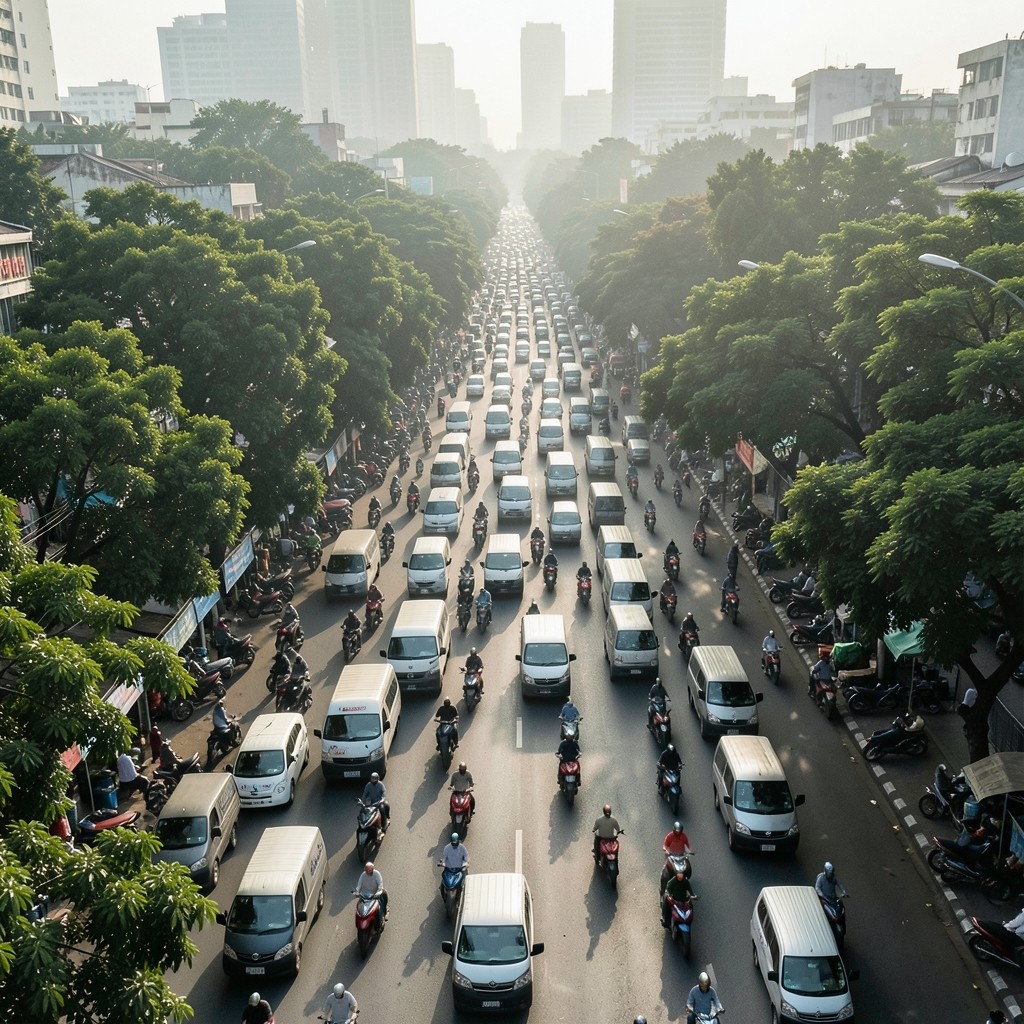
Not every street deserves a corridor study. We look for routes with repeated late-window clusters, transfer points that feed more than one depot, or volume that is about to rise because a new merchant contract is coming.
A useful set for Bangkok often mixes one river-adjacent corridor with heavy transfer friction, one elevated-expressway approach with unpredictable merge delays, and one inner-soih network where motorcycle riders absorb most of the last kilometre.
Give each corridor a plain success measure before you open the spreadsheets: on-time handoff rate, average dwell at the named transfer, or percentage of stops completed inside the promised window. Without that, the study becomes a tour of maps.
Clients who prepare stop timestamps for two recent busy weeks leave with recommendations they can schedule the following month — not a binder of charts with no owner.